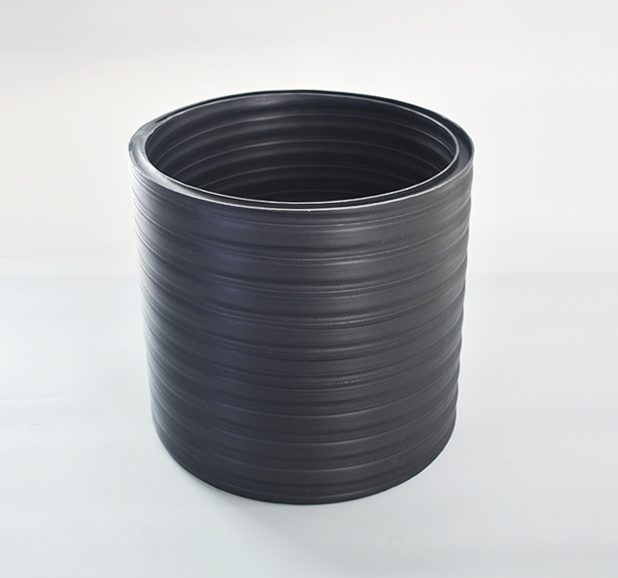
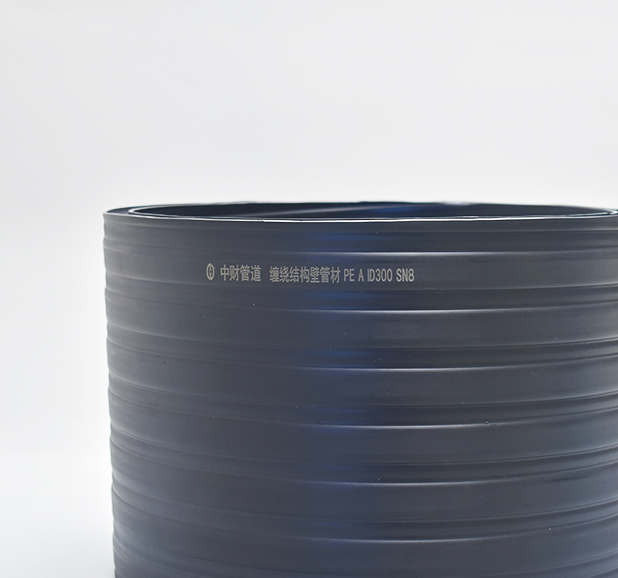
HDPE winding structure wall (A) type pipe

HDPE winding structure wall (A) type pipe
Implementation Standard: GB/T 19472.2-2017
Material: High density polyethylene (HDPE) resin, with the possible addition of appropriate amounts of inorganic nanoparticles, light stabilizers, and other additives to enhance performance.
Caliber range: The nominal diameter ranges from DN200mm to DN2800mm, with common specifications including DN300, DN400, DN500, DN600, DN800, DN1000, DN1200, DN1500, etc
Use: Municipal engineering; Road engineering; Industrial sector; Environmental engineering; architectural engineering; Other fields.
Features: High strength and toughness; Long corrosion resistance and lifespan; Excellent hydraulic performance; Reliable connection with zero leakage; Lightweight and fast construction; Environmental Protection and Economy.
Custom orders are supported.

Description

1.Product Introduction

The HDPE Spirally Wound Structural Wall (Type A) Pipe, commonly referred to as Spiral Wound Type A Pipe or hollow-wall spirally wound pipe, is a type of structural wall pipe manufactured primarily from high-density polyethylene (HDPE) using a hot winding forming process.

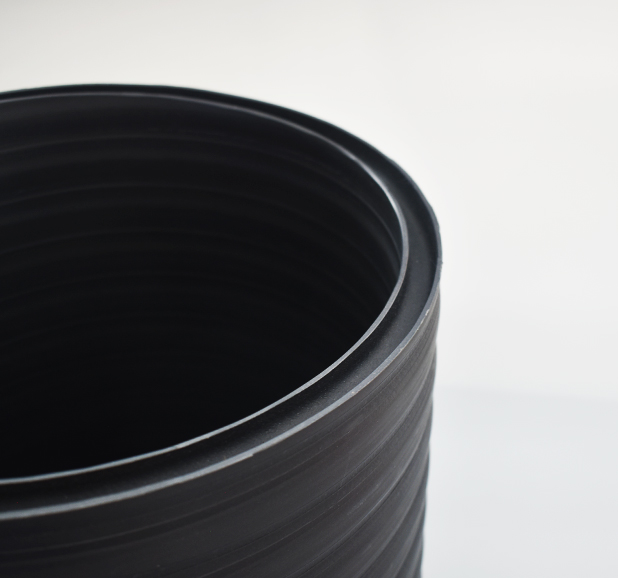
Its pipe wall features a unique hollow I-shaped structure, a design grounded in mechanical principles that significantly enhances the pipe’s ring stiffness and overall mechanical properties while saving material and reducing weight. As a flexible pipe, it exhibits excellent extensibility, effectively resisting uneven settlement of the foundation and improving the seismic resilience and disaster mitigation capabilities of public infrastructure.

Product Specifications

2.Technical Parameters

Parameter Item

Technical Specifications & Description

Product Standard

GB/T 19472.2-2017

Diameter Range

Nominal diameter (DN) covers from DN200mm to DN2800mm. Common specifications include DN300, DN400, DN500, DN600, DN800, DN1000, DN1200, DN1500, etc.

Ring Stiffness Class

SN6.3 (SN6), SN8, SN10, SN12.5. Some manufacturers can produce SN16 class products.

Single Pipe Length

Standard length is typically 6 meters. Production of other lengths is also supported based on agreement between supplier and purchaser.


Main Raw Material

High-Density Polyethylene (HDPE) resin, with possible addition of appropriate amounts of performance-enhancing agents such as inorganic nanoparticles, light stabilizers, etc.

 Applicable Temperature

The temperature of the conveyed medium should not exceed 45°C for long-term operation.

3.Connection Methods

  • Electrofusion Coupling Strip Connection:Utilizes electrical heating elements embedded within the strip to generate heat upon electrification, fusing the pipe connection area and the strip into a single unit. This method provides a robust, high-strength joint with excellent sealing performance, suitable for pipes of DN600 and above.
  • Heat-Shrink Sleeve (or Band) Connection:Involves wrapping the connection area with a specialized heat-shrink sleeve, which is then uniformly heated (e.g., with a torch) to shrink and form a seal. This method offers lower accessory costs, convenient installation, and is not restricted by the availability of on-site electrical power.
  • Socket (Spigot-and-Socket) Connection:One end of the pipe is a socket (bell), the other a spigot, paired with an elastomeric sealing ring. Installation simply requires inserting the spigot into the socket. This method is characterized by simple, fast operation. As a flexible joint, it offers good seismic performance and is particularly suitable for sites where electrical operations are not advisable.
  • Stainless Steel Clamp Connection:Employs a stainless steel clamp and a sealing rubber sleeve, forming a connection through mechanical fastening. This method allows for convenient installation and is not affected by environmental conditions.

4.Key Advantages & Selling Points

  • High Strength & High Toughness:The “I”-beam shaped structural wall design imparts high ring stiffness to the pipe, resulting in excellent compression and impact resistance. As a flexible pipe, it can effectively accommodate minor ground deformations.
  • Corrosion Resistance & Long Service Life:The HDPE material offers outstanding resistance to chemical corrosion, is not easily degraded by chemicals in wastewater or soil, and has a service life exceeding 50 years.
  • Excellent Hydraulic Properties:The very smooth inner wall creates low frictional resistance, high flow capacity, and resistance to scaling. For a given diameter, its water conveyance capacity is superior to that of concrete pipes.
  • Reliable, Zero-Leakage Connections:Multiple available connection methods ensure excellent joint sealing, completely preventing environmental contamination from wastewater leakage.
  • Lightweight & Rapid Installation:The pipes are lightweight for easy handling. Installation does not require heavy machinery, which can reduce construction costs and shorten project timelines.
  • Environmental Sustainability & Cost-Effectiveness:The product is non-toxic and non-polluting, and is 100% recyclable. Its comprehensive installed cost is often lower than that of traditional concrete pipes.

5.Product Applications

  • Municipal Engineering:Urban underground sewer networks, stormwater collection systems, stormwater and sewage diversion retrofit projects.
  • Road & Railway Engineering: Seepage and drainage systems for railways and highways.
  • Industrial Applications:Industrial wastewater discharge for factories; mine ventilation and drainage.
  • Environmental Engineering:Leachate collection pipes for landfill sites; wastewater treatment plants.
  • Construction Projects:Outdoor drainage for residential complexes; rainwater discharge for large-scale venues.
  • Other Fields:Agricultural drainage, water conservancy construction, conduits for power cables, etc.

6.Testing & Certifications

  • Testing Standards:Testing is conducted in accordance with national standards such as GB/T 19472.2-2017.
  • Key Test Items:These include, but are not limited to, ring stiffness, impact resistance, ring flexibility, oven test, ash content, and density.
  • Testing Institutions:Testing can be commissioned to national or industry-level quality inspection centers possessing CNAS and CMA accreditations.
  • Corporate Qualifications:Manufacturers should typically hold ISO 9001 Quality Management System certification.

7.Manufacturing Process Flow

  • Raw Material Preparation:High-density polyethylene (HDPE) resin is used as the primary raw material.
  • Profile Extrusion:The HDPE raw material is heated, plasticized, and extruded through the first extruder into a specifically shaped profile strip.
  • Winding and Fusion:On a winding machine, the profile strip is spirally wound onto a mandrel. Simultaneously, molten HDPE from a second extruder is used to fusion weld the overlapping seams of the wound profile strip, ensuring the quality of the pipe’s welded joints.
  • Cooling and Shaping:The wound pipe is cooled to set its shape.
  • Cutting and Inspection:The pipe is cut to specified lengths and undergoes necessary quality inspections.

8. Packaging and Delivery

  • Packaging Method:The ends of the pipes are protectively packaged to prevent impact damage during transportation and storage.
  • Standard Length:The standard pipe length is 6 meters per piece.

9. Sales Service

  • Pre-Sales Service:Provision of professional technical consultation, product selection advice, and engineering solution design support.
  • In-Sales Service:Provision of detailed product technical documentation. Some manufacturers offer on-site technical guidance during construction to ensure proper installation.
  • After-Sales Service:A dedicated service hotline is established for promptly addressing customer inquiries. Clear quality warranties are provided for product quality.

10. Company Strengths

  • Production Technology:Possession of advanced production lines and mature spiral winding and fusion welding process technology.
  • R&D and Innovation Capability:Emphasis on product research & development and technological upgrades, with some enterprises participating in the formulation of industry association standards.
  • Quality Control System:Implementation of a comprehensive quality management system with strict inspection and control from raw materials to finished products.
  • Product Line and Application Cases:A complete range of product specifications and extensive application cases covering multiple key engineering fields.
Zhongcai(Sancai) Pipe has 20 years of industry experience and serves over 500 customers worldwide. Its advantages include:
  • Advanced production capacity: Automated production line with an annual output of over 100000 tons, meeting large-scale demand. R&D Strength: Collaborate with universities to continuously innovate products, such as anti-static PE pipes. Customer case: Successfully participated in the Asian municipal water supply project, with a customer satisfaction rate of 98%. Environmental Commitment: Use recyclable materials, reduce carbon footprint, and support green buildings.
  •  Strict quality control: Establish a sound quality management system, implement full process quality monitoring from raw material procurement to product delivery, and rigorously inspect every link to ensure reliable product quality.
  • Rich industry experience: With years of deep cultivation in the pipe and fittings industry, we have accumulated rich project experience and successfully served numerous large-scale municipal, construction, industrial and other projects, winning widespread recognition and praise from customers.